
The Christmas story does not end with the baby’s arrival in Bethlehem. Matthew tells of exile in and then return from Egypt. Luke does not seem to be aware of this part of the story of young Jesus. However, Luke moves into Jesus’ formative years, a time that is less sensational but significant for understanding his human and divine nature. The Return to Nazareth and The Boy Jesus in the Temple (Luke 2:21— 52) are turning points in this transformation, exposing the religious and psychological underpinnings of Jesus’ future ministry. These stories are not footnotes but central chapters in the Christmas narrative, revealing both the nature of Christ and his continued significance for Christians today. Consequently, they are the focus of the 12th and final episode of our series “The Complete Christmas Story.”
Return to Nazareth: Back to Normal
Jesus’ birth marks the beginning of his earthly life. Following his presentation at the temple—where Simeon and Anna identify him as the Messiah (Luke 2:21–38)—Jesus is brought home to Nazareth with Mary and Joseph. Mathew has the family get to Nazareth via Egypt. But by either account, the family ends up in Nazareth. This represents his re-entry into the regular cycles of life, so very different from the heavenly cycles at the time of his nativity. For the Jews, the eighth-day circumcision (Luke 2:21) and naming of the child (Luke 2:22) were critical rites, marking his incorporation into the covenantal community.
Nazareth, a remote village in Galilee, serves as the stage for Jesus’ youth. And here he continues to grow in wisdom and stature. In favor with God and man (Luke 2:40). The starkness of this scene highlights a fundamental reality — Jesus’ godliness is not self-evident. Instead, it comes to him slowly, mixed in with his mortal journey. His return to Nazareth is more than a geographical move; it’s a theological one. It shows us that God’s plan isn’t reserved for the spectacular but is lived out in the mundane, even in the most ordinary of places.
The Boy Jesus in the Temple:
A Foretaste of the Divine
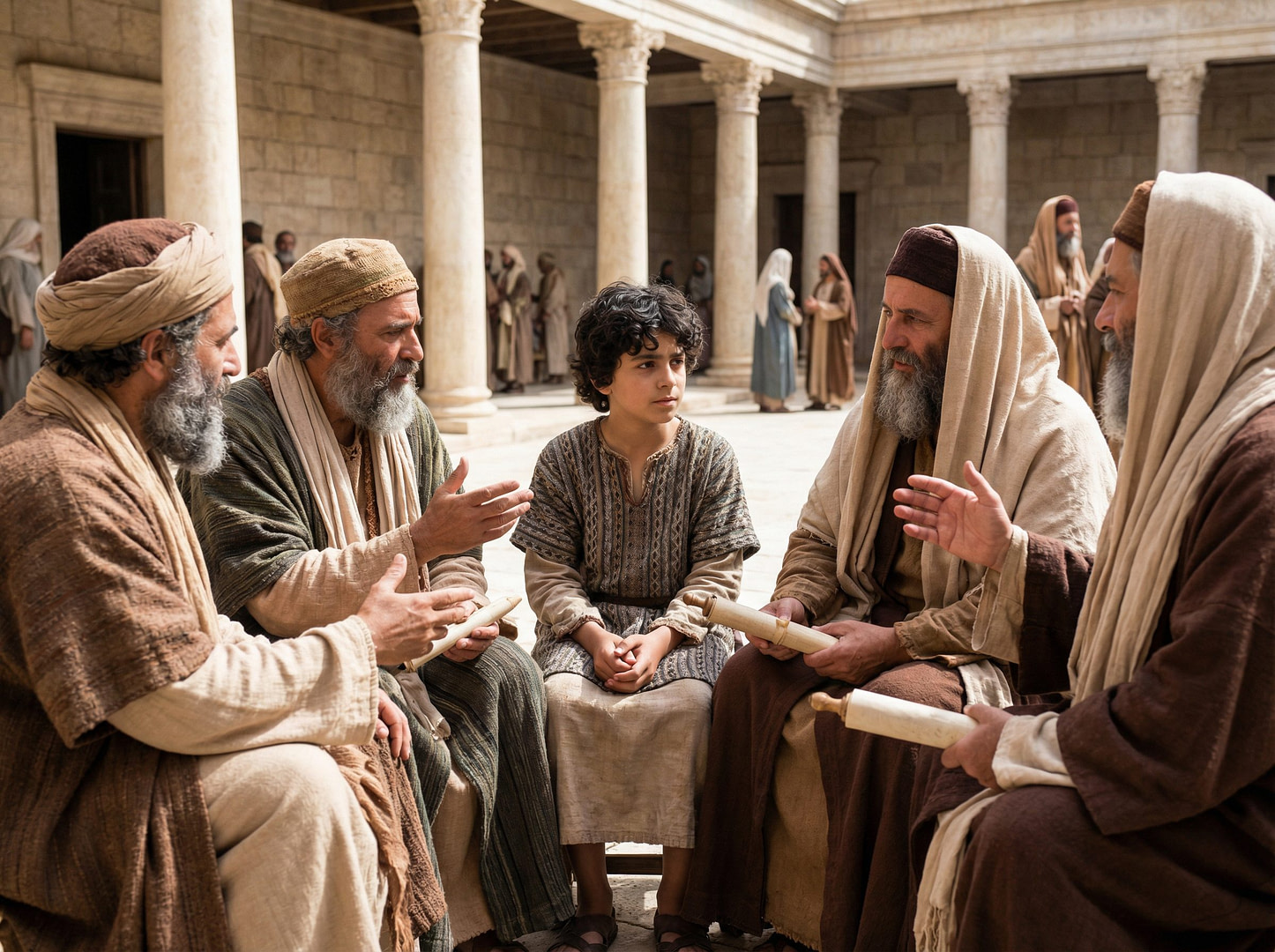
At twelve, Jesus surprises his family by remaining in the temple when they believe he is with them. This episode, recounted in Luke 2:41–52, is one of the rare moments in the New Testament when Jesus is explicitly depicted as a child. But even at this young age, his godliness starts to shine through. The temple, a holy place where God’s presence was believed to reside, becomes a theater for Jesus’ deep conversation with the scribes.
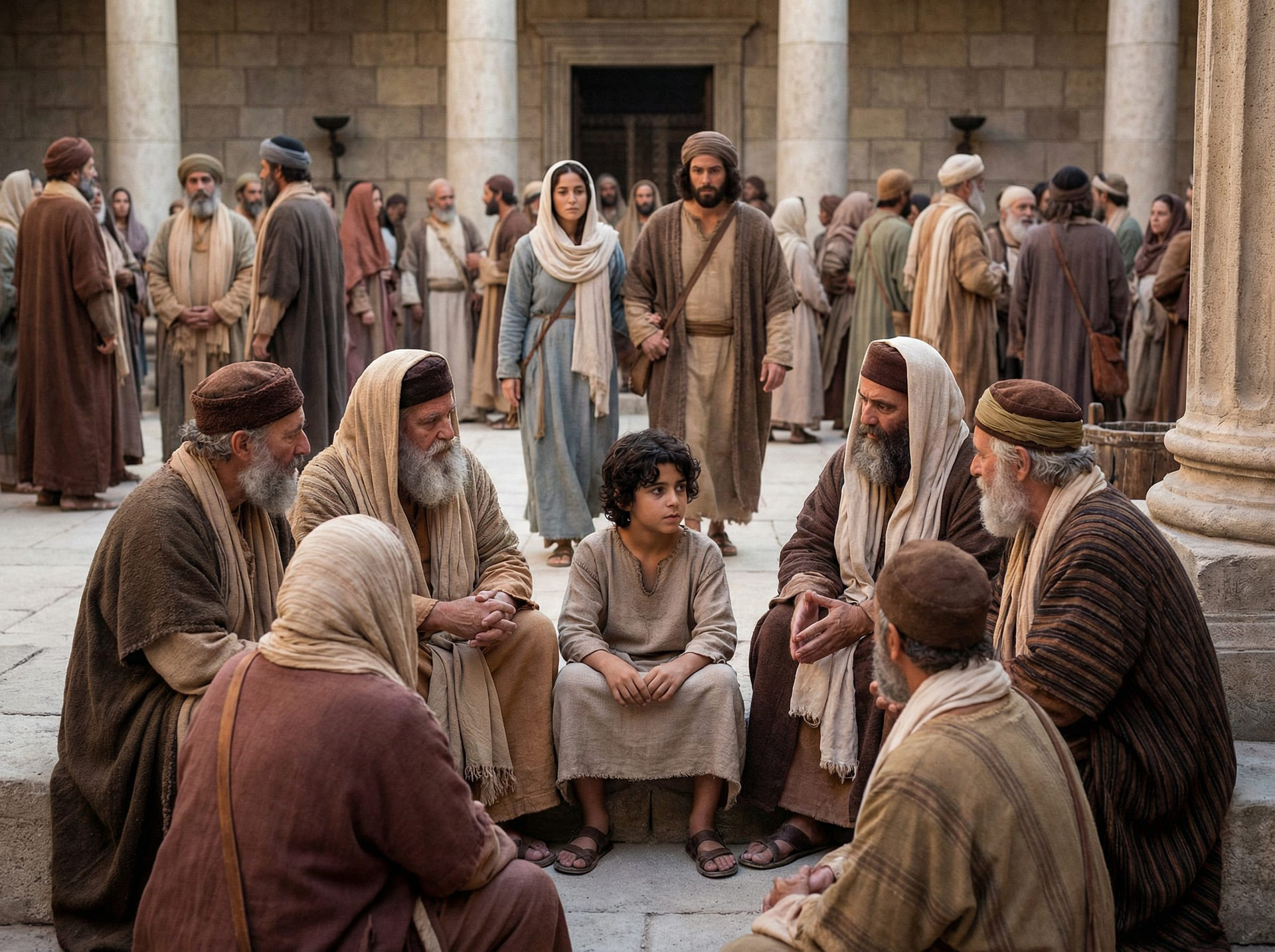
Here, we find Jesus not merely involved in the spiritual life of his people but also exhibiting a knowledge of Scripture beyond his years. When his parents find him, his reply–‘Did you not know that I must be in my Father’s house?’. (Luke 2:49)—demonstrates his recognition of his special connection with God. This instance is an understated but potent premonition of his subsequent life as the Son of God. It also underscores the conflict between his divine mission and his humanity — even as a boy, he is summoned to a destiny that exceeds the ordinary.
Theological Depth: The Sacred and The Profane
These stories are essential to the Christmas story because they root Jesus’ godliness in his humanness. The move to Nazareth highlights that Jesus is not some weird hermit. Still, part of a family and community, growing up through the same stages as any child. This relatability is important for Christians because it presents Jesus as one who can sympathize with our weaknesses, as he himself struggled, suffered, and grew.
Meanwhile, the temple episode exposes Jesus’ early dedication to his God’s will. It’s a moment of Jesus’ nascent sense of his vocation. This foreshadowing links his infancy with his adult ministry, indicating that his identity as the Messiah is not happenstance but intentional. And the temple, a sign of God’s covenant with Israel, is a small-scale version of Jesus’ future role as human mediator between himself and God.
Relevance for Christians Today
For modern Christians, these tales carry timeless teachings. First, they remind us that faith is as much about living faithfully in the mundane as it is about miraculous interventions. Jesus’ development in Nazareth reflects our own — believers summoned to mature in holiness by the ordinary decisions, the relationships, the service of daily life.
Second, the temple scene highlights the value of spiritual pursuit. Jesus’ discussion with the teachers inspires Christians to dig into Scripture and to pursue wisdom in their faith. Mary and Joseph’s reaction also instructs us on the relationship between human responsibility and divine calling—Mary and Joseph, while understandably concerned, affirm his special calling and continue to support him.
Lastly, these stories underline the theme of obedience. Jesus’ obedience to remain in the temple, even at the cost of leaving his parents, illustrates a life lived in submission to God’s will. For contemporary Christians, this is a summons toward obedience.
Conclusion
Jesus’ passage from infancy to adulthood, as described in Luke 2:21–52, reflects his divine and human identity. The return to Nazareth and the boy in the temple are not merely historical breadcrumbs, but theological touchpoints that link the birth of Christ to his later ministry. They remind us that the Christmas story is not just about a savior arriving in Bethlehem, but a journey of faith, growth, and obedience. For modern Christians, these stories motivate a life of humility, spiritual wonder, and faith in God’s plan—however mundane it may initially appear.
Ultimately, Jesus’ childhood is a subtle yet profound reminder that God’s work is in the mundane and that the journey to manhood is a continuation of his nativity.