

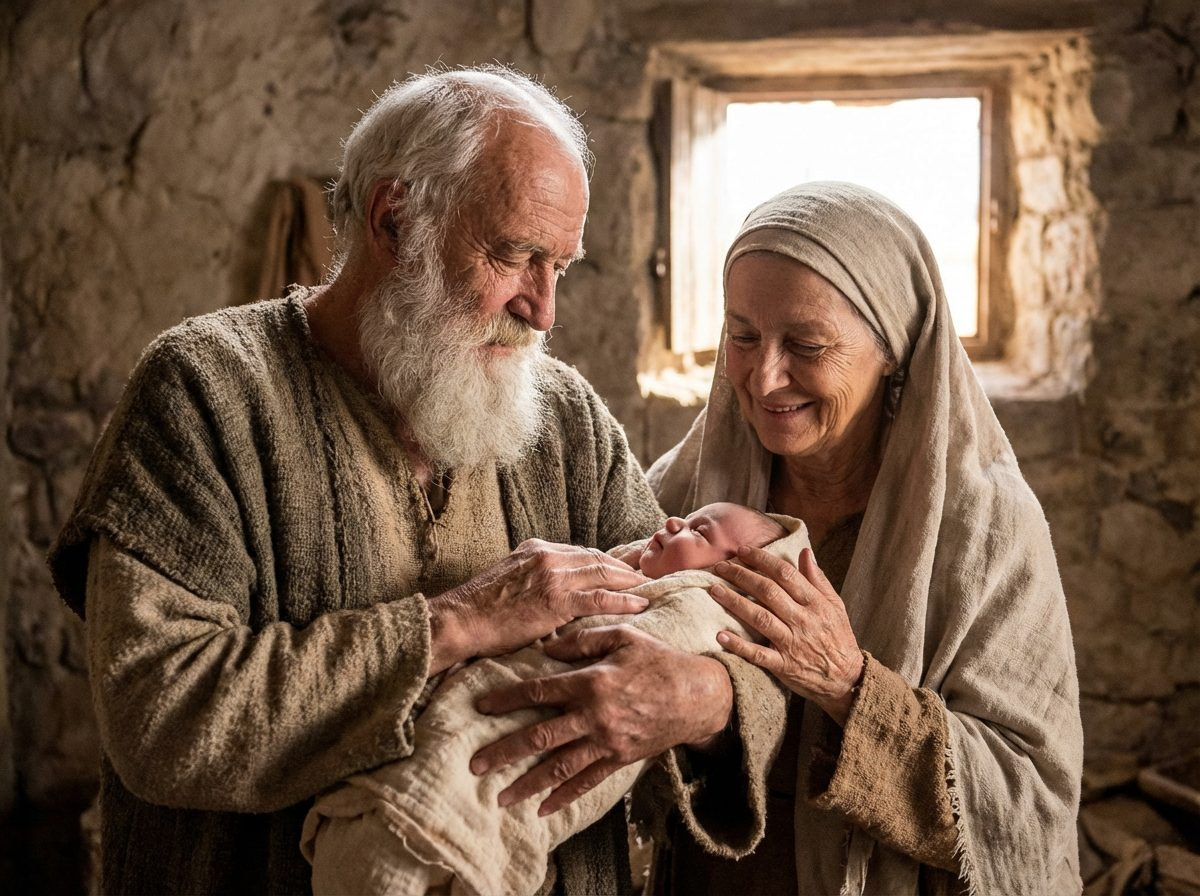
When you think of the Christmas story, no doubt one of the first characters to come to mind (of course, after Jesus) is John the Baptist. No? Well, look at your nativity scene on your shelf. Surely, John is there. No? Well, that is good as he should not be there.
Nevertheless, John the Baptist is central in the Christmas narrative. Here you will find out why, in this second edition of our series, The Complete Christmas Story.
Most of us think of John the Baptist preaching in the wilderness before Jesus' public ministry begins. John then baptizes Jesus, marking the start of Jesus' ministry. In Matthew's gospel, that is the first time we meet John. But that is not the case in Luke.
In telling the complete Christmas story, we must combine Matthew and Luke. They are the only two gospels that include the birth of Jesus narrative, and it appears that neither of them had the complete story when they were writing. Each had different parts of the story. They do not conflict, but we have to do some work to figure out where in the timeline each part fits.
In Luke's telling of the Christmas story, the birth of John is critical to the story of Jesus' birth. It is important to remember that Luke starts his account not with Jesus, but with John. The account of John the Baptist's birth in Luke (1:5-24, 57-80) is much more than a biblical character's origin story — it's a compelling tale that captures themes of faith, God's intervention, and the preparation for salvation, serving as a pivotal prelude to Jesus' arrival. Luke's narrative is replete with details of theological importance that emphasize the ongoing plan of God leading into the New Testament.
The Announcement and Prediction of John's Birth

It begins during a time of political instability, with King Herod, or Herod the Great, notorious for his cruelty. In this context, Zechariah and Elizabeth represent the faithful remnant of Israel who yearned for God's promises to be fulfilled. They were righteous and blameless, had walked in the commandments of the Lord, but were battling a very personal struggle—childlessness.
A childless marriage was not only emotionally painful for the couple but also socially stigmatized in Jewish culture, where progeny, particularly sons, were regarded as a blessing and indication of God's favor.
Gabriel visits Zechariah while the latter is in the temple carrying out his priestly duties during his turn of duty, a detail that highlights the sacredness of the moment. Gabriel's announcement that Zechariah will become a father is extraordinary, both personally for the elderly couple and in a redemptive-historical sense. The angel's proclamation is full of specifics: John is to be filled with the Holy Spirit even from his mother's womb, and his mission will be to prepare the people for the coming of the Lord by turning their hearts. This introduction to John's character is important because it connects him directly to the messianic mission Jesus will ultimately accomplish.
But because Zechariah is hesitant and doubtful—owing to his and Elizabeth's old age—Gabriel causes him to become mute until the prophecy is fulfilled. This reply is disciplinary and reinforces the considerable gravity of divine authority. It captures a universal human struggle—the conflict between faith and skepticism. Zechariah's muteness represents a pause, God's way of encouraging reflection and belief in his assurances, giving us space for greater insight until the promise unfolds.
The Birth of John
Luke interrupts John's story with some of Jesus' story, then continues with John's story in the 57th verse, and for now, that is where we continue.
As John's narrative continues, his birth is imminent, and he is excited. Elizabeth, advanced in age, conceives, and her joyous exclamation, "The Lord has done this for me!" resonates with the biblical motif of God's redemptive activity through surprising means.

John's birth is a moment of communal joy. When it comes time for his circumcision, Elizabeth's insistence on naming him John – against the cultural norm of naming him after his father – marks a moment of prophetic obedience and divine revelation.
Even the relatives and neighbors' amazement at the sudden naming indicates an awareness of John's unique purpose in God's plan. Zechariah's regaining of speech marks not only the fulfillment of Gabriel's prophecy, but also the beginning of a new act in salvation history. In his Benedictus, or song of praise, Zechariah praises God for John's birth as well as the hope for redemption in the coming Messiah. Through his prophecy, Zechariah proclaims great theological realities — he declares the tender mercy of God, the dawn from on high touching down to guide their feet, and the impact of John's ministry in preparing the Lord's way. This foretells the central themes of grace, salvation, and the transformative power of the Messiah.
Luke 1:76 And you, John, will be called the prophet of the Most High,for you will go before the Lord to prepare his ways,
77 to give his people knowledge of salvation by the forgiveness of their sins.
78 Because of the tender mercy of our God, the dawn from on high will break upon us,
79 to shine upon those who sit in darkness and in the shadow of death,to guide our feet into the way of peace." (NRSVUE)
The Theological Significance and Impact
The depth of this story is in how John's birth connects with the story of Jesus. John's role as the forerunner is a key part of the biblical story showing God's faithfulness in readying hearts for Christ's arrival. John's ministry—focused on repentance and baptism—lays the groundwork for Jesus' message of love, grace, and redemption. John's call for repentance is not just preparation; it is also the heart of Christianity, requiring a conversion of heart as one approaches God.
Additionally, knowing what happened at John's birth helps modern Christians understand God's timing and the fulfillment of prophecies. It reminds us that the impossible is made possible by God. For those who believe, the story calls them to a faith that embraces both the magical and the ordinary, a faith that understands that God often uses the ordinary to do the incredible.
For Christians, however, the implications of John's birth narrative are more than historically interesting; it's a summons to action. What this story really highlights is preparation–not simply for the arrival of Christ in the past sense, but for His continued work in believers. John's message challenges Christians to nurture lives of repentance, expectation, and openness to God's ways of moving in the world.
In sum, the birth of John the Baptist in Luke inspires believers to contemplate God's faithfulness, the strength of God's promises, and the need to be spiritually watchful and prepared for God to move in their lives. The story artfully connects John's prophetic role to Jesus' arrival, bolstering a broader narrative of salvation that still resonates with Christians today. By accepting the implications of John's nativity, believers are called into an active communion with God's grace, providing hope, renewal, and meaning on their spiritual paths.


Version 1.0.0
I’m behind, but I plan on reading all of these. I am enjoying them very much. To expand on this one, I want to add Matthew 17:10-13. There we learn a bit more about the purpose of John’s life. Thanks for writing these.
Very insightful, as that reference adds a layer to our understanding of John’s nature!