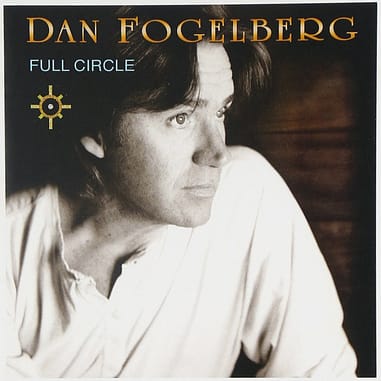


This edition of Rock Theology explores faith, nature, and the search for meaning in Dan Fogelberg’s song “Earth Anthem” from his 2003 album Full Circle. Rock Theology’s purpose is to explore religious and theological themes in the music of secular artists.
Dan Fogelberg’s musical legacy is woven from threads of folk, rock, and poetic lyricism—his songs often reach beyond the personal into the universal, seeking out truths both terrestrial and transcendent. On his 2003 album Full Circle, Fogelberg presents “Earth Anthem,” a composition that stands as a meditation on the sacredness of the planet, the interconnectedness of creation, and the spiritual yearning for unity and stewardship. This essay explores the theological and religious themes embedded in “Earth Anthem,” situating the song within the broader context of Fogelberg’s biography and the tapestry of the Full Circle album.
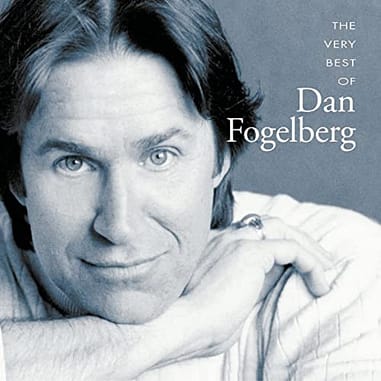
Dan Fogelberg
Dan Fogelberg was born in Peoria, Illinois, in 1951, the son of Lawrence Fogelberg, a high school band director, and Margaret Fogelberg, a classically trained pianist. From an early age, Fogelberg was immersed in music, learning to play the piano and guitar while absorbing the sounds of folk, classical, and jazz. He attended the University of Illinois, where he honed his skills in local clubs and coffeehouses, eventually launching a career spanning three decades.

Fogelberg’s breakthrough came in the 1970s with albums like Home Free (1972), Souvenirs (1974), and Nether Lands (1977). His songwriting is characterized by introspective lyrics, melodic sensibility, and a gentle yet persistent probing into love, loss, and the human condition. Albums such as The Innocent Age (1981) and High Country Snows (1985) display his versatility and willingness to explore Americana and bluegrass traditions, but always with a spiritual undercurrent.
Fogelberg seemed to be an atheist in his early career, singing in his hit “Part of the Plan” that there are “no heavenly gates that you’re gonna make it to one day.” Yet, throughout his career, there appears to be a rise in spiritual belief, as evidenced by references to a creator in his songs. By the time we reach his 1993 River of Souls album, not only the title track, but also “Higher Ground” and “Holy Road” seem to contain clear religious beliefs. Then, in 1999, he released a Christmas album mainly featuring religious tracks. Nevertheless, I have not found references to him speaking of a conversion to Christianity, let alone something like a born-again experience.
The latter part of Fogelberg’s career was marked by reflection and a return to his roots. His final studio album, Full Circle (2003), is both a creative homecoming and a valedictory statement, arriving two years before his diagnosis with prostate cancer. Fogelberg’s album explores time, nature, and the cycles of existence, shaped by his views on mortality and the mysteries of life.
Contextualizing “Earth Anthem” Within Full Circle
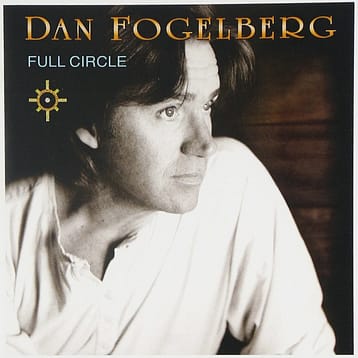
The 2003 album Full Circle came long after the heights of Fogelberg’s fame and popularity. Full Circle, as its title suggests, is an album about completion, renewal, and the eternal return. Despite the importance of the themes, to be blunt, the songs, including “Earth Anthem,” are at best average. They fall far short of the excellent-to-exceptional quality of Fogelberg’s early work that led to his popularity and fame. In fact, the quality of the album, Love in Time, released by his widow after his death, made up of previously unreleased songs, is far superior to that of Full Circle.
Nevertheless, “Full Circle” is a record suffused with wistfulness and gratitude, inviting listeners to reflect on their place in the world and the legacy they leave behind. It is within this context that “Earth Anthem” emerges—not only as a song but as a statement of faith, or at least hope, in the planet and its people.
In juxtaposition to the more intimate tracks on the album, which deal with love, memory, and personal reckoning, “Earth Anthem,” as the final track, widens the lens. Fogelberg becomes the bard of the biosphere, offering a hymn for the planet that is at once ecological and spiritual. The song’s placement within the album is strategic—it acts as a pivot, reminding listeners that the circle of life encompasses not just individuals, but all of creation.
Theological and Religious Themes in “Earth Anthem”
“Earth Anthem” might have been better titled “Hymn to the Earth,” as it is more of a hymn than an anthem. It reminds me a great deal of the Christian hymn “For the Beauty of the Earth,” though without that song’s clearly Christian refrain of “Christ, our Lord, to you we raise this, our hymn of grateful praise.”

“Earth Anthem” is the final track on the album, following “Icarus Ascending,” which tells the story of a boy given wings by his father in Greek mythology. The wings were held together with beeswax, and Icarus flew too close to the sun, causing the wax to melt and the wings to fall apart. However, Fogelberg’s song focuses on the ascent and is a reasonably positive take on the tragic story. “Icarus Ascending” is by far the best song on the album.
“Earth Anthem” is a very simple song with many non-word vocalizations. Otherwise, the lyrics consist of an opening chorus, a single verse that contains part of the chorus, and then a repeat of the chorus.
Sacredness of Creation
At its core, “Earth Anthem” is a excultation to the sanctity of the natural world. Fogelberg takes a cosmic view, describing the Earth as a remarkable exception, likening it to an island in the sea.
And we are but an island in an ocean
This is our home, third from the sun
The image of an island in the middle of an ocean is striking. Especially when you consider the literalness of space, we are this miracle in the midst of nothing. In this vast nothingness, no one else is coming to save us if we destroy this miracle of life.
In Jewish and Christian theology, creation is often viewed as an expression of God’s artistry, a gift to be tended and cherished. Fogelberg’s anthem echoes this stewardship, calling listeners to recognize the planet as holy ground. The refrain functions almost as a liturgical invocation, urging humanity to treat it with reverence and care in hopes that we can:
Let it be evergreen, let it be evergreen.
The song’s imagery recalls the Psalms, which praise the heavens and the Earth, the trees and the fields, as evidence of the Creator’s handiwork. Yet Fogelberg’s spirituality is inclusive—his language opens to all traditions, suggesting an ecumenical embrace of the sacred.
Stewardship and Responsibility
The song’s ethical dimension is precise: with the gift of creation comes the responsibility to protect it. Fogelberg’s lyrics do not shy away from the consequences of environmental degradation, sounding an alarm for the planet’s future. In this, his message aligns with contemporary ecological theology, which asserts that caring for the Earth is a spiritual imperative.
Religious traditions worldwide contain teachings about stewardship—the Jewish concept of “Tikkun Olam” (repairing the world), the Christian doctrine of responsible dominion, and the Indigenous understanding of humans as caretakers of the land. “Earth Anthem” synthesizes these teachings, encouraging listeners to act with compassion and foresight, lest the circle be broken.
In fact, Fogelberg’s lyrics suggest that keeping the Earth evergreen will take both God’s work and perhaps extreme human action.
God, keep it evergreen
To keep it evergreen, I would lay my life down
We could probably question what exactly Fogelberg means by “I would lay my life down.” It seems unlikely that he was literally willing to die to save the planet. As he did not do so, nor is such an extreme step likely to have any significant lasting impact. Perhaps there is hyperbole being used here, and he did indeed conduct significant ecological work during his life. Moreover, getting too caught up in whether Fogelberg personally did enough to save the planet will cause us to miss the point. Saving the planet requires human sacrifice.
Hope and Renewal
A final religious theme in “Earth Anthem” is the promise of renewal. Fogelberg’s Full Circle album meditates on cycles—life, death, rebirth—and the song reflects this rhythm. Even as he acknowledges the Earth’s wounds, Fogelberg sings of hope: the possibility of restoration, the healing of the land, the return of balance. The Earth being “evergreen.”
In Christian theology, this is the theme of resurrection; in Hinduism and Buddhism, it is the wheel of samsara. Fogelberg’s anthem, in this sense, becomes a prayer for the renewal of the Earth and the human heart.
Conclusion:
“Earth Anthem” as Spiritual Testament
“Earth Anthem” stands as a distillation of Dan Fogelberg’s lifelong engagement with questions of meaning, purpose, and belonging. Within the Full Circle album, the song serves as both a culmination and an invitation—a call to recognize the Earth as sacred, to live in harmony with creation, and to assume the responsibilities of stewardship.
Fogelberg’s biographical journey, marked by artistic searching and personal loss, informs the depth of his vision. His music is a bridge between the secular and the sacred, offering listeners a way to encounter the divine in the rhythms of nature and the bonds of community.
In a world beset by ecological crisis and spiritual fragmentation, “Earth Anthem” remains a timely exhortation. It asks us to listen, to care, and to sing with gratitude for the Earth and all its gifts. In so doing, Fogelberg brings his audience full circle—back to the source, back to the mystery, and perhaps back to the heart of faith itself.