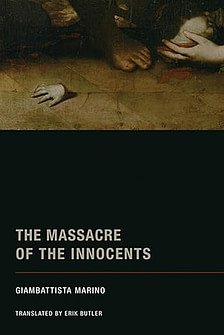


The "Massacre of the Innocents," as recounted in Matthew 2:16-18, is one of the most somber and thought-provoking episodes associated with the birth of Jesus. This is the 10th (of 12) episode in our series “The Complete Christmas Story.” While the Christmas story is often celebrated for its themes of hope, joy, and divine intervention, this tragic event reveals a deeper dimension of the narrative—one that speaks to the realities of suffering, evil, and yet God's ultimate purpose.
Role in the Christmas Story
The Christmas narrative is often portrayed as a serene tableau: a quiet stable, a radiant star, joyful shepherds, and, later, at a house in Bethlehem, the gift-bearing magi. Yet, nestled within the Gospel of Matthew's account is a jarring, violent event that disrupts this peace. King Herod, enraged that the visiting magi did not return to betray the location of the newborn "King of the Jews," orders the murder of all male children in Bethlehem under the age of two. This episode, traditionally called the "Massacre of the Innocents," is a dark chord in the Christmas carol. Still, it is essential for understanding the full depth of the story and its enduring relevance for Christians.
Significance in Matthew's Narrative
Matthew places this horrific event not as a random tragedy, but as a fulfillment of prophecy. He quotes Jeremiah 31:15: "A voice is heard in Ramah, weeping and great mourning, Rachel weeping for her children and refusing to be comforted, because they are no more."
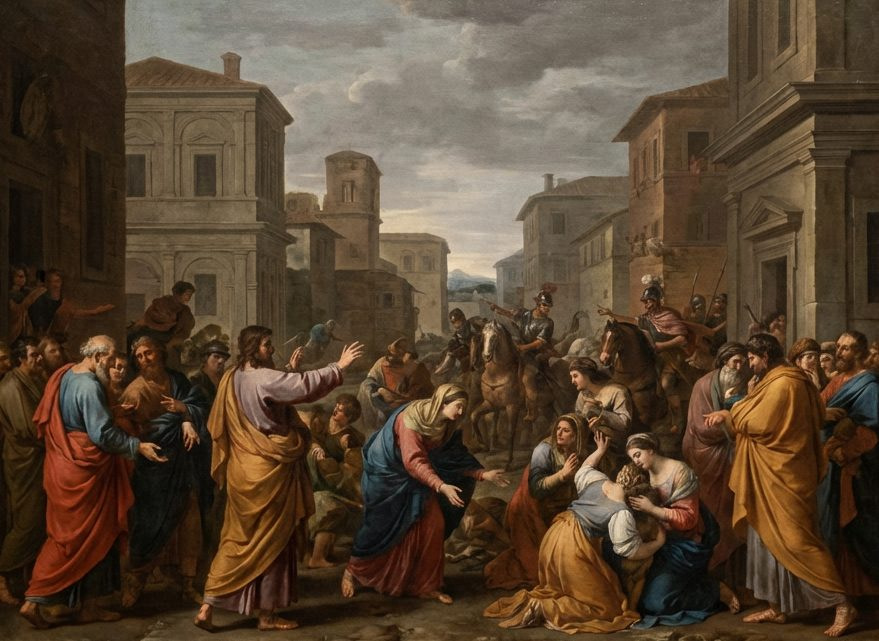
We now know that the threat to Jesus was genuine, and that is why it was crucial to get Jesus to asylum in Egypt. The story also reveals what rulers will do to keep power. While it may not be a slaughter of children, we may see parallels in what contemporary leaders will do in their attempts to remain in power.
Matthew’s narrative accomplishes several profound things:
1. Identifies Jesus with Israel's Story: Jesus is immediately cast as a new Moses. Just as Pharaoh slaughtered Hebrew infants, leading to Moses' hidden survival and eventual role as deliverer, Herod's massacre leads to Jesus' flight to Egypt and eventual return as a greater deliverer. Jesus relives the foundational story of Exodus.
2. Reveals the True Conflict of Christmas: The birth of Christ is not a gentle myth but the decisive invasion of God's Kingdom into a world dominated by rival powers—here embodied by Herod. Christmas declares a new King, and the powers of this world react with violent opposition from the very start. The shadow of the cross falls over the manger.
3. Affirms God's Sovereignty in Suffering: The fulfillment of prophecy shows that even the evil actions of a tyrant are encompassed within God's redemptive plan. God does not cause evil, but God is not defeated by it. God works through and despite it to bring about salvation.
Remembrance
The early Church developed the Feast of Holy Innocents to remember the massacre of these children. It is celebrated by Western Church (almost exclusively by Catholics) on December 28 and by Eastern Churches (Orthodox) on December 29. I am not sure how those became the dates for the celebration. Perhaps it was an attempt, like this post, to remind Christians that this is part of the Christmas story. However, I think it is an unfortunate date because the event does not occur until after Epiphany (the arrival of the magi), which is celebrated on January 6. It would have been better if the church calendar had placed the date for this remembrance after January 6.
Initially, this feast day was focused on martyrs and recognized these children as the Christian Church's first martyrs. It also focused on all the martyrs of the Church throughout the, now, two millennia of church history. Consequently, it is a good time for us to think of those who have died for a cause, be it within the Christian faith or not. Who might you want to remember and lift up as we explore the story of the massacre of the innocents?
Unfortunately, over time, the Feast of the Holy Innocents became one of the "feast of fools" days in the church calendar. It became a kind of "children's day," a day of merrymaking for children, during which they were granted special rights they did not usually have. For example, in some places, a boy would be elected bishop for the day, parents would surrender power, and in monasteries, the youngest member would become the abbot or abbess for the day. While one can see the connection to the original purpose in letting children be children for the slaughtered children who never got to be children, I wonder if the problem of such a sad remembrance during the twelve days of Christmas had something to do with this transformation. In more recent times, the focus has returned to its original purpose: martyrs.
In general, Protestant churches have not celebrated the massacre of the innocents. However, in the 1850s, Protestant Churches in the United States began celebrating a Children's Day, typically on the second Sunday in June. Children's Day predates the celebration of Mother's Day and Father's Day. Julia Ward Howe started Mother's Day (ironically, she was the writer of the Battle Hymn of the Republic) as an anti-war protest day on which Mother's vowed to never send their sons off to war again. Father's Day was started in 1909 as a complement to Mother's Day, which by then had lost its anti-war flavor. There may be a parallel with the transformation of Mother's Day from a protest day against war into a celebration of mothers. It is probably natural to prefer tame holidays to those that challenge us.
Importance for Christians Today
For modern believers, this passage is not an archaic or disturbing footnote. It speaks with painful relevance to our world and our faith.
1. A Realistic Portrayal of the World God Enters: The massacre reminds us that God did not enter a sanitized, sentimental world. God entered our world—a world of political tyranny, violence, unjust suffering, and the weeping of mothers. The Incarnation is God's solidarity with the victims of history. Christmas hope is not an escape from this world's pain, but God's answer delivered from within it.
2. A Call to Lament and Justice: Rachel's weeping is sanctified in Scripture. This passage gives Christians a model for holy lament—to weep with those who mourn, to acknowledge profound evil without easy answers. Furthermore, it stands as an eternal indictment of the abuse of power and the sacrifice of the vulnerable (the innocents) for the preservation of a ruler's ego and control. It calls the Church to be a voice for the voiceless and a defender of the defenseless.
3. The Depth of Christmas Hope: The light of Bethlehem shines brightly against this darkness. The hope of Christmas is not a naive optimism but a hard-won hope that has stared into the face of Herod's evil and declares that this child, this vulnerable refugee, is stronger. The Resurrection is the ultimate answer to the massacre, the promise that the Herods of history do not have the final word, and that every innocent life is held in God's eternal memory and love.
4. A Warning Against Complicity: The story implicates a system: Herod, his soldiers, and a populace likely gripped by fear. It challenges us to examine where we might be silent or complicit in systems that harm the "little ones," whether literally or spiritually.
Conclusion
The "Massacre of the Innocents" prevents us from reducing Christmas to mere comfort and cheer. It roots the story in the soil of real human suffering and political terror. It reveals that the coming of Christ is both a profound comfort and a disruptive confrontation. For Christians today, it is a sobering reminder that to follow the Christ-child is to acknowledge the world's darkness, to lament its victims, to resist its Herods, and to stake our lives on the subversive, vulnerable hope that began in a manger and, through the cross and empty tomb, will ultimately heal a weeping world. The Christmas story, in its full biblical telling, offers not just joy, but a joy that has overcome sorrow.