
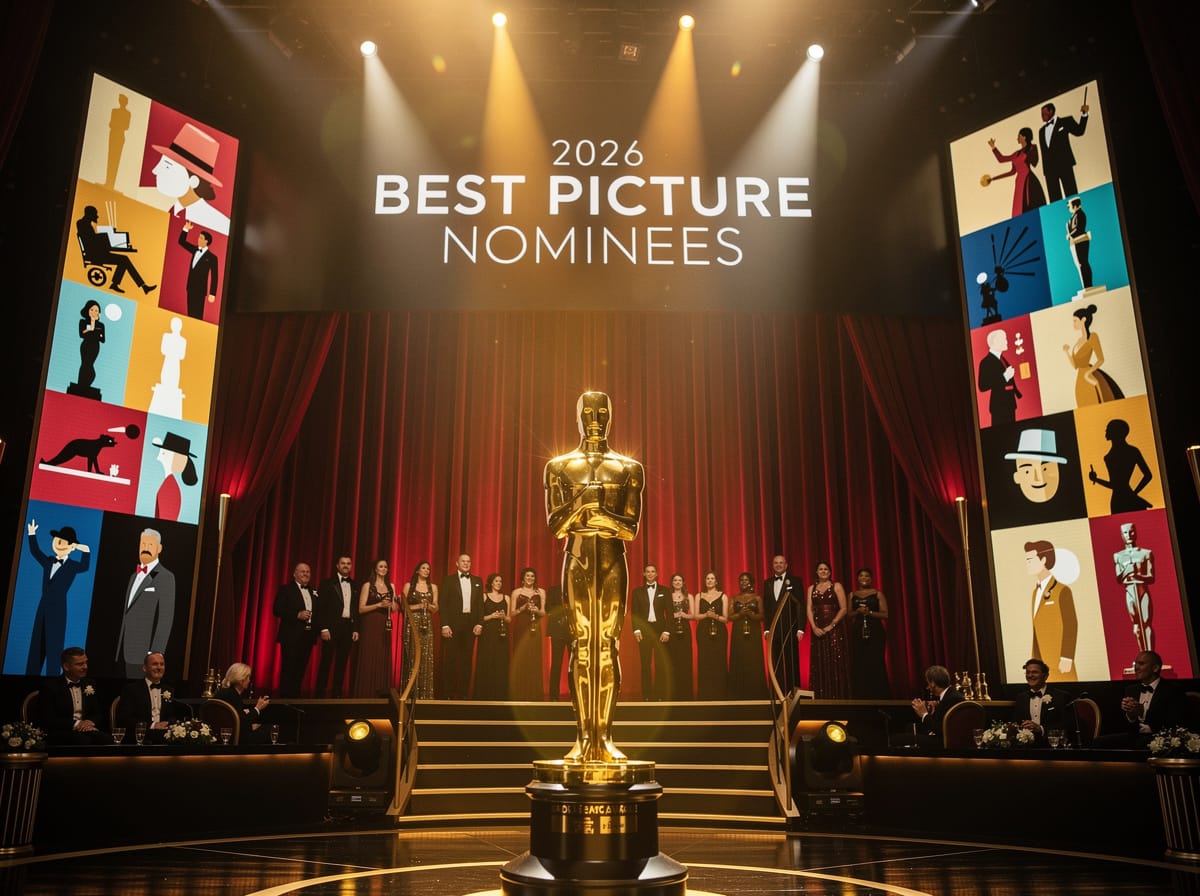
The film award season is over, the winners have been announced, and now most of us face the more practical question: which of these movies are actually worth streaming? Which films were actually worthy of being considered for the title of Best Picture?
At Explore Big Ideas, I am not mainly interested in whether a movie is fashionable, expensive, or talked about on social media. I care about whether it gives us something to think about. The best films do more than entertain. They press on our assumptions, stir our conscience, and stay with us after the credits roll. That is the standard I used in ranking this year's Best Picture nominees.
I should also say that I still think the Academy Awards made a mistake when it expanded the category to ten nominees. There are not ten films most years that belong in a Best Picture race. This year, I found five that really did. Some of the others are worth watching, but they do not all belong in the same conversation.
So this list is meant to be useful. If you have not seen all ten, it should help you decide where to start, what to save for later, and what you can safely skip.
1. Train Dreams
Train Dreams is a quiet film, but I do not mean that as faint praise. It is a period drama set in the early twentieth-century Pacific Northwest. It follows Robert Grainier, a logger and railroad worker played by Joel Edgerton, through years of work, loss, loneliness, and change. It is based on Denis Johnson's novella, and the film has the feel of a story pared down to its essence.
When I finished watching Train Dreams, my first reaction was, "wow." It was the best film I had seen in several years. The movie is about grief, guilt, work, memory, and the search for meaning after terrible loss. Brian Tallerico, writing for RogerEbert.com captures it well: "the reason it's one of the best of the year is how [the director] threads the needle between brutal reality and wistful poetry."
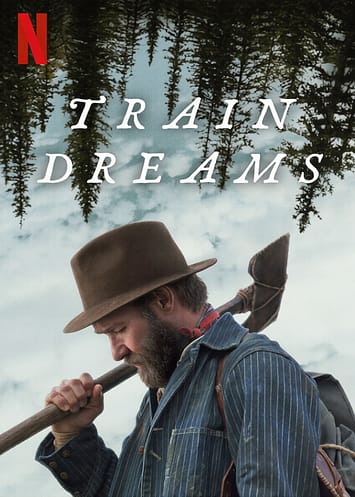
The film also says something about progress, especially when progress comes through violence, displacement, and damage to the natural world. The images of forests, trains, fire, and empty spaces are beautiful, but they are not merely decorative. They carry the weight of the story.
This was an easy choice for my number one film. It is not loud or flashy, and some viewers may find it slow. But if you are willing to sit with it, Train Dreams is deeply rewarding. It is exactly the kind of movie that fits the mission of this site: thoughtful, morally serious, visually memorable, and likely to stay in your mind long after you have watched it.
You can currently watch Train Dreams on Netflix.
2. Sinners
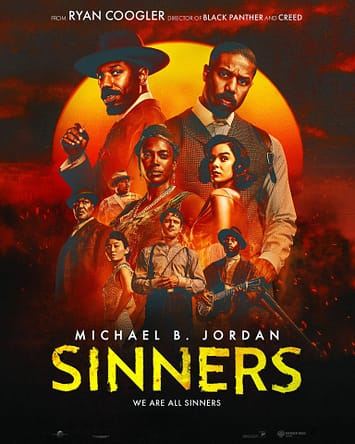
To be clear, Sinners is a horror movie, and more specifically a vampire movie. Those are not genres I usually like much. But this movie is an exception. In fact, it came very close to being my pick for the best film of the year.
Sinners had 16 Academy Award nominations, which is a record. It won Best Actor for Michael B. Jordan, along with Cinematography, Original Score, and Original Screenplay. That kind of recognition can sometimes feel like hype, but in this case it is deserved. This is not a normal horror film. It uses the genre to explore race, class, music, history, violence, temptation, and community in substantial ways.
What makes the film work is that it never treats evil as cartoonish. The characters are tempted, compromised, courageous, and afraid. The horror elements are real, but the larger question is about what people are willing to trade away and what they are willing to protect. For a movie about vampires, it has a surprising amount to say about American history and the human soul.
By the way, do not stop when the credits begin. Surprisingly, the story continues.
You can stream it on HBO Max and YouTube TV. You can purchase it or rent it on Amazon
3. Sentimental Value
Sentimental Value is a drama about two sisters and their estranged father. This once-celebrated filmmaker tries to reenter their lives through a new movie project. That description makes the film sound small, and in some ways it is. But the questions underneath it are not small at all. The movie is about memory, art, abandonment, and the stories families tell about themselves.
It is fair to say that Sentimental Value is more of an artsy film than some of the others on this list. That may not appeal to everyone. Parts of the film are in Norwegian, and the movie is partly about the making of a movie. Still, the acting is excellent, and the emotional center is strong enough to carry the more self-conscious parts of the story. It received nine Academy Award nominations and won Best International Film.
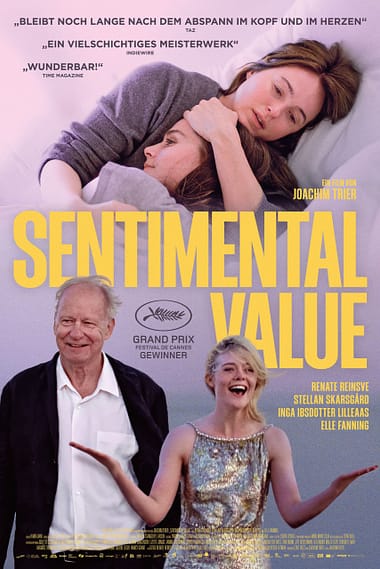
It is not a film I would recommend to everyone in the same way I would recommend Train Dreams or Sinners. But for people who like theater, film, family stories, and complicated relationships, it is well worth watching. It asks a good question: how much of our past can we honestly reclaim, and how much do we simply learn to live with?
You can stream Sentimental Value on Hulu or rent or purchase it on Amazon.
4. Hamnet
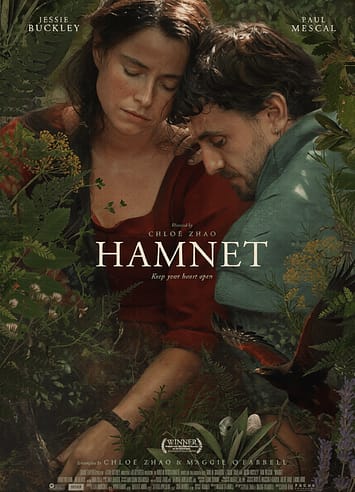
Hamnet is inspired by the short life of Shakespeare's son and imagines the grief, family life, and creative aftermath surrounding that loss. The film is about Shakespeare, but not in the usual "great man of literature" way. It is more interested in the people around him, especially the pain that may have shaped the art that followed.
It is a must-see film and is probably more appealing to a broad audience than the three ranked above it. It has literary interest, strong performances, and an emotional story that does not require specialized knowledge of Shakespeare to appreciate.
What raises Hamnet above a standard historical drama is the way it thinks about grief and art. The movie asks whether suffering can be transformed into something meaningful without exploiting people's pain. It also reminds us that behind famous works are ordinary human losses. I ranked it fourth not because it is weak, but because the top three struck me as slightly more original and more powerful.
You can stream Hamnet on Netflix or rent or purchase it on Amazon.
5. Frankenstein
This version of Frankenstein is fairly faithful to the original story. We first get Victor's tale: a brilliant creator whose ambition outruns his sense of responsibility. Then we get the Creature's tale, which is the film's stronger half. He is rejected, despised, hunted, and left to carry a life he never asked for and cannot escape.
I saw this film early in my journey through the ten nominees, and at the time I thought it might end up as my choice for Best Picture. The acting is very strong, and the production is large, beautiful, and carefully made. It looks like a serious epic, not a disposable monster movie.
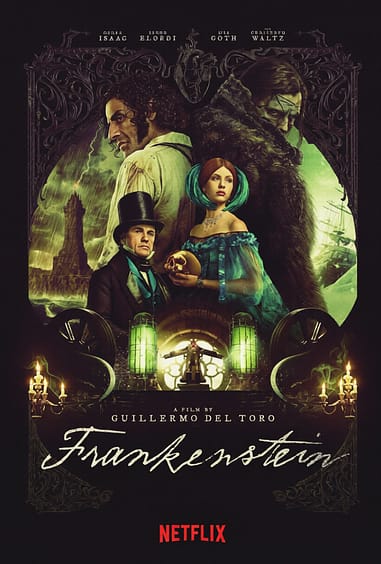
What keeps Frankenstein in the middle of the list is that its strongest ideas are already familiar. The story still matters because it asks important questions: How far should human ambition go? What do creators owe to what they create? What happens when intelligence runs ahead of compassion? Those are timely questions in an age of fast-moving technology such as AI. Still, the film did not surprise me as much as the four above it. It is very good, but not quite great.
You can stream Frankenstein on Netflix.
This is the end of the list of films that I thought were truly worthy of Best Picture nominations. That does not mean the remaining films have no value. Some are entertaining, and a few have interesting ideas. But from here on, I think the gap becomes clear.
6. One Battle After Another

One Battle After Another is a political action drama about former revolutionaries, hidden identities, family secrets, and the long consequences of violence. The plot follows people who once believed they were changing the world and now find themselves pursued by the forces, mistakes, and compromises of their own past. It is energetic, tense, and at times funny, but it is also messy by design.
The film was nominated for 13 Academy Awards and won Best Picture, Best Director, Best Supporting Actor (Sean Penn), Best Adapted Screenplay, Best Film Editing, and Best Casting. I can understand some of those wins.
I do not understand Best Picture. To me, the movie feels like the Academy rewarding an anti-authoritarian statement more than a film. In the age of Trump, that message surely helped it. The film is worth watching, but I do not think it belongs above the five films ranked ahead of it.
What it does offer is a useful look at how political movements can shape—and sometimes damage—the people inside them. It is about loyalty, fear, family, and the costs of living for a cause after the cause itself has become confused. That is enough to make it interesting. It just did not strike me as disciplined or moving enough to rank higher.
One Battle After Another can be streamed on Amazon Prime, YouTube TV, and HBO Max, and purchased or rented on Amazon.
7. Bugonia
Bugonia is a dark comedy from Yorgos Lanthimos, adapted from the South Korean film Save the Green Planet! It stars Jesse Plemons as a conspiracy-minded beekeeper who becomes convinced that a powerful pharmaceutical executive, played by Emma Stone, is actually an alien trying to destroy the Earth. So he kidnaps her. That gives you a sense of the movie's tone.
Bugonia received four Academy Award nominations, including Best Picture and Best Actress for Stone. It did not win any Oscars. The film is strange, sharp, and intentionally uncomfortable. If you like Lanthimos's very offbeat style, especially something like last year's Poor Things, you may find it fascinating. If not, this is probably not the place to begin.

You can stream Bugonia on Netflix or rent or purchase it on Amazon.
8. F1

F1 is exactly what you would expect in many ways: fast, loud, polished, and built around the drama of elite racing. It follows a familiar sports-movie pattern: an aging driver trying to prove he still has something left, and a team trying to survive pressure from every direction. The racing scenes are the point, and on that level the movie delivers.
F1 had four Academy Award nominations, including Best Picture, and it won for Sound. That win makes sense. It is a very enjoyable sports film, especially for people who care about racing, which I do not. The acting is solid, and the cinematography and effects are impressive. But the story is well worn. It is basically the old-guy comeback story with better engines.
There are still ideas worth noticing here. The movie raises questions about ambition, risk, teamwork, and whether winning is worth what it costs. But those questions remain secondary to the spectacle. I enjoyed the film more than I expected to, but I cannot see it as a serious Best Picture contender.
You can stream F1 on Apple TV and rent or purchase it on Amazon.
I suggest you skip the next two films unless something I write below captures your attention.
9. Marty Supreme
Marty Supreme is a sports comedy-drama starring Timothée Chalamet as an eccentric table tennis player chasing success with almost manic determination. The film has energy, period style, and a performance by Chalamet that deserved attention. It also introduces many viewers, including me, to a competitive world most of us probably have not thought much about.
Marty Supreme was nominated for nine Academy Awards but did not win any. Chalamet's Best Actor nomination was understandable. The problem is that the central character is exhausting. He is a hustler, a scoundrel, and often a jerk, stepping over people whenever it helps him get ahead.
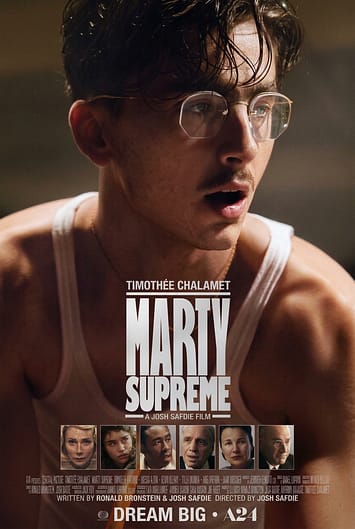
There is something like a redemption turn near the end, but by then I did not care enough. Unless you have a special interest in table tennis or Chalamet's performance, I would skip it.
You can stream Marty Supreme on HBO Max and purchase or rent it on Amazon.
10. The Secret Agent
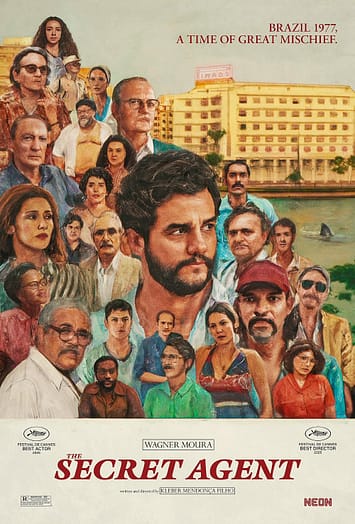
The Secret Agent is a Brazilian historical political thriller set during the late 1970s military dictatorship. It follows Marcelo, a technology expert who returns to Recife hoping to reconnect with his young son but becomes caught in a web of surveillance, corruption, and political danger. The setting is interesting, and the film clearly wants to say something about authoritarianism, memory, and fear.
The film was nominated for Best Picture, Best Actor (Wagner Moura), Best Casting, and Best International Feature Film. It did not win in any of those categories. Subtitles are not the issue. The problem is that the film is confusing in ways that do not feel productive. The timelines are hard to follow, and parts of the plot do not come together well.
If you want a stronger film about Brazil's dictatorship, I would recommend I'm Still Here, which won Best International Film at last year's festival.
There may be thoughtful material here for viewers who enjoy political thrillers, but I had to work too hard to find it. A film can be challenging without being muddy. For me, The Secret Agent was more frustrating than illuminating, which is why it lands at the bottom of the list.
You can stream The Secret Agent on Hulu, and you can rent or buy it on Amazon.
Why This Rank Order?
The ranking comes down to a few things. First, I gave the most weight to films that stayed with me after I watched them. Train Dreams, Sinners, Sentimental Value, Hamnet, and Frankenstein all gave me something to think about beyond the plot. They raised questions about grief, evil, memory, family, art, technology, history, and responsibility. They were not just well made. They mattered.
Second, I considered how fully each film achieved what it seemed to be trying to do. A few of the lower-ranked films are enjoyable. Still, they lean more heavily on genre, spectacle, or a single performance. That is not a bad thing. It just matters when deciding what belongs in a Best Picture conversation. If your time is limited, I would start with the top five, especially Train Dreams and Sinners. Those are the films I expect to remember most clearly years from now.